

Mad Honey Nepal – Himalayan Mad Honey | Value Pack
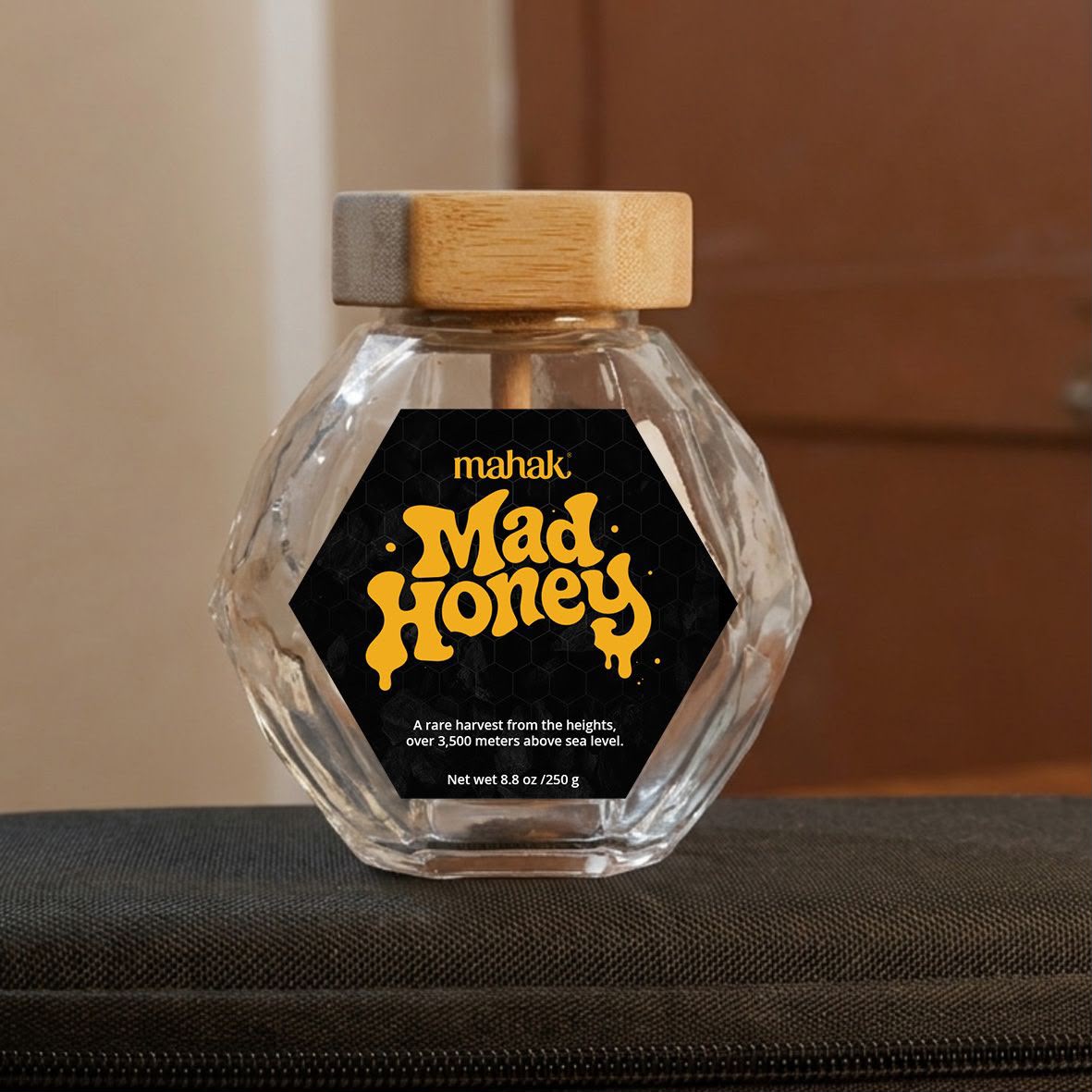
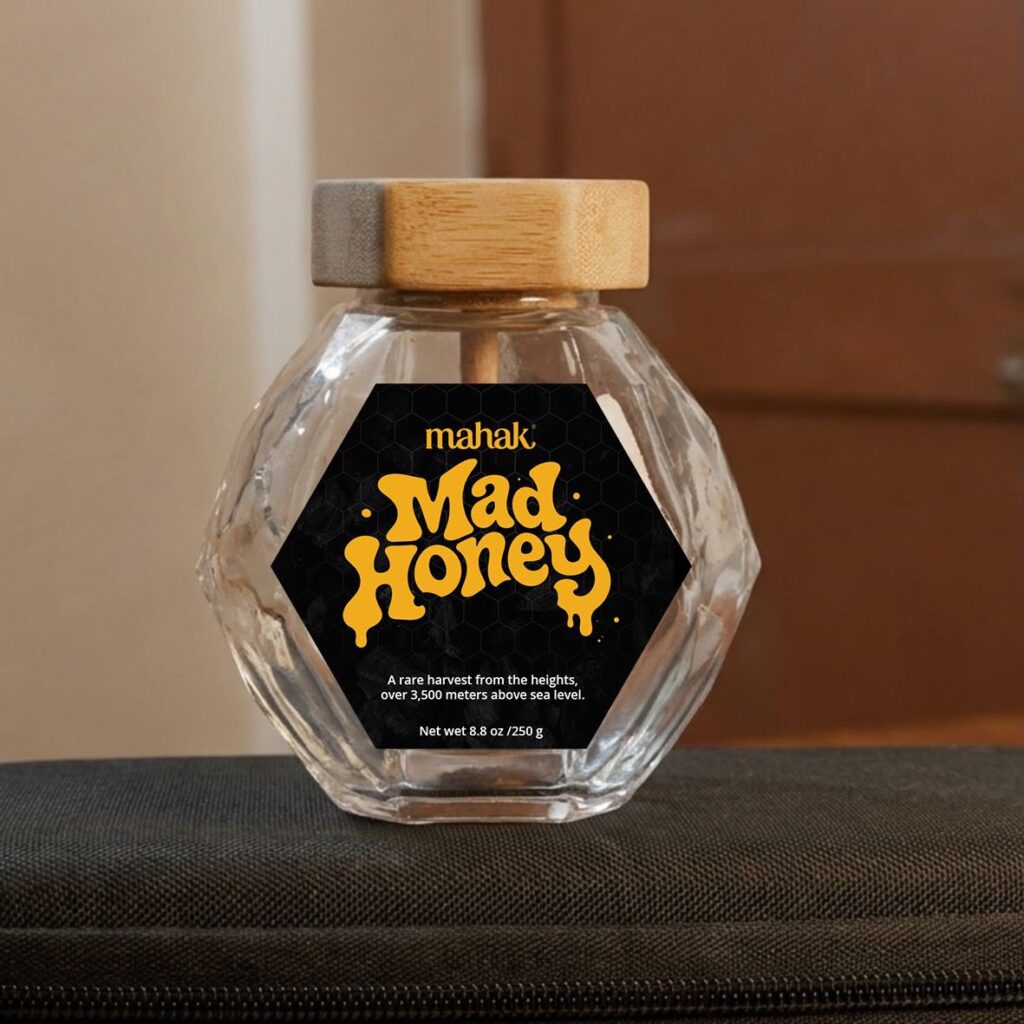
Faceted glass · wooden lid
Nepal
Mahak Maha · Rare harvest
Mad Honey Nepal – Himalayan Mad Honey | Value Pack
250g/8.8oz
Mad honey is the rare honey that contains natural neurotoxins called grayanotoxins which cause hallucinations and stoned World largest honey bees apis labrosia makes this honey by collection nectar and pollen from 22 type rhododendron flowers. the graytxoinins give the honey its reddish color its slightly bitter, throat catching finish and its mild psychoactive kick mad honey is a rare honey that carries a natural buzz people has understood it for a century as a folk medicine.
- Limited high-altitude harvest
Above 3,500 m
High-altitude wild harvest
Single origin
Nepal · limited
season
Sealed by hand
Numbered special release
Origin & harvest
Mad honey Is produced principally in Nepal’s Himalayan above 2300 to 4500 of altitude. mad honey Nepal is considered as world most rare honey because of limited source, seasonal harvesting, low production. Nepal’s mad honey is considered as most authentic and premium on its quality. mahak mad honey is harvested from mahakulung ,solukhumbu (4000 m height ) indigenous Rai Communities fearlessly climb high Himalayan cliff to hunt massive hive . the tradition involves lighting smoking fire at the base of cliff and descend on handmade bamboo rope and ladder on barefoot. this activity shows conflicting relationship between mountain, human and pollinator
Product details
This is not honey in the ordinary sense. Drawn from the nectar of Himalayan rhododendron flowers, it naturally contains grayanotoxins compounds the flowers produce and the bees unknowingly carry into their honey. It is the natural chemistry that has made “mad honey” a subject of fascination across the Himalayas for centuries.
Care
Mahak Mad Honey is harvested in limited quantity only 125 jars from this season’s Mahakulung harvest. Each jar is unblended and unprocessed one bloom, one harvest.
Category:
Mad Honey
100% Authentic & Traceable
About mahkulung harvest
Mahakulung Rural Municipality is a remote mountainous area in Solukhumbu District, Koshi Province, Nepal. Mahakulung, Solukhumbu lies in the high Himalayan foothills, with elevations ranging from roughly 2000 to over 4500 meters above sea level. The region is characterized by steep mountain landscapes, pristine forests, and diverse high-altitude vegetation. Rhododendron forests are particularly prominent, especially across the mid- and upper-mountain areas known for its rich Kulunge Rai culture, traditional villages, forests, and Himalayan landscapes. It is also connected with traditional Himalayan livelihoods, including agriculture, livestock, honey hunting, and forest-based activities.
Honey hunting in Mahakulung traditionally takes place during Baisakh and Jestha (April–June), when the warmer spring season brings abundant flowering across the mountain forests. During this period, rhododendron and other Himalayan flowers bloom, providing rich nectar for wild bees. Local honey hunters carefully navigate steep cliffs and remote forests to harvest honey from wild bee colonies. However, wild honey is naturally available only in limited quantities, as harvesting depends on the seasonal flowering cycle, bee colonies, and the challenging mountain environment. This scarcity makes Mahakulung’s wild honey a rare and carefully harvested natural product, deeply connected to the region’s traditional honey-hunting culture.
Important safety information
Rare does not mean risk-free.
Grayanotoxin concentration varies by flower, season, and location. Even small amounts can cause low blood pressure, slow heart rate, vomiting, fainting, or other serious symptoms. There is no guaranteed safe serving. Seek urgent medical help if symptoms occur. This product is not intended to diagnose, treat, cure, or prevent disease.
Understand the experience
What happens after consumption?
Natural compounds
Grayanotoxins occur naturally in some rhododendron-derived honey. They interact with sodium channels and may influence nerve, muscle, and heart activity.
Reported effects
Consumers report warmth, dizziness, relaxation, altered sensation, nausea, or mild intoxication. Effects are unpredictable and evidence for wellness claims is limited.
Why it is sought
Its distinctive flavour, rarity, traditional reputation, and unusual sensory experience make genuine wild mad honey a coveted natural product.